
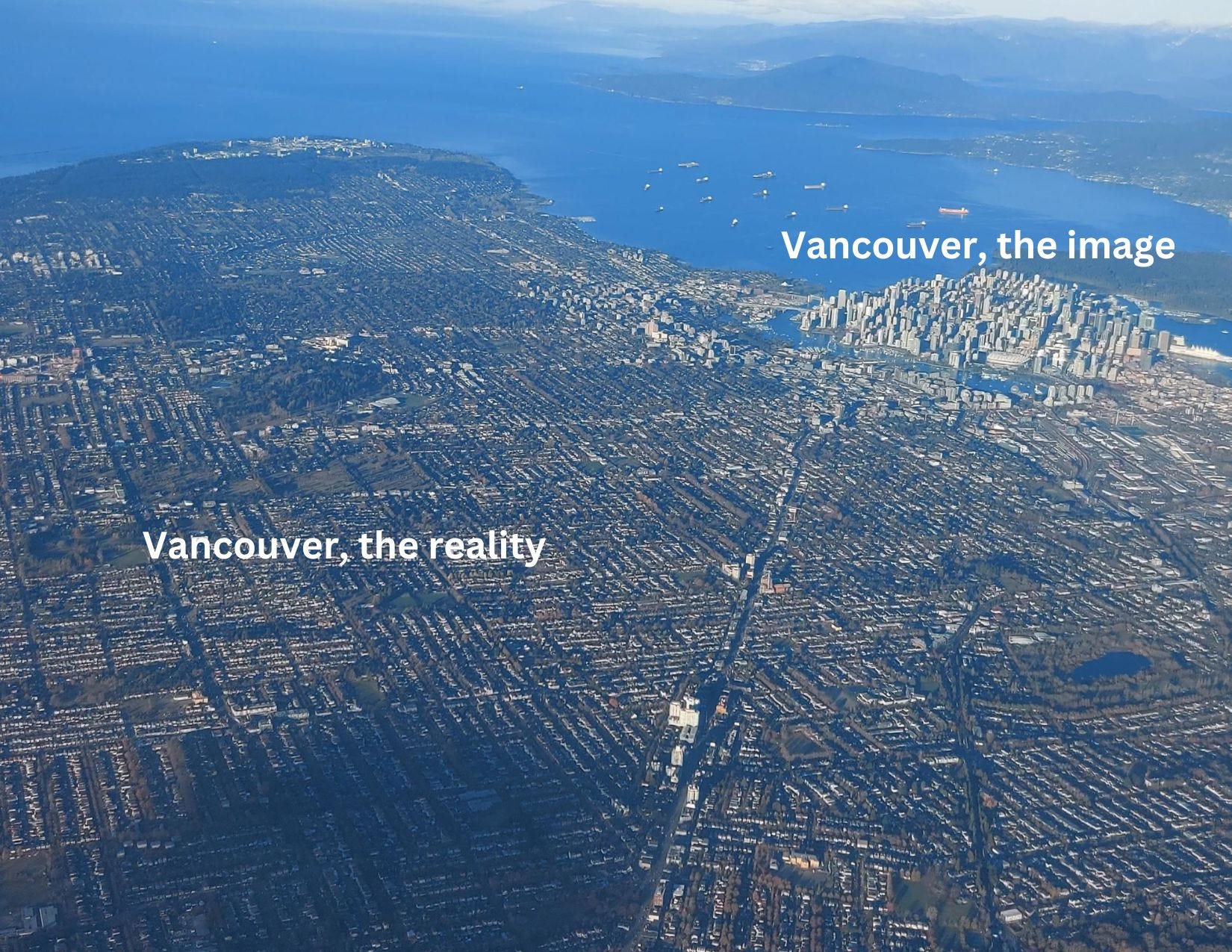
When you picture Vancouver, you probably think of the towers downtown. But when you look at the rest of the city, you find street after street of detached houses. Meanwhile, average rents have nearly doubled over the past 15 years. Then why is so much prime land, close to jobs and transit, built at suburban densities?
The answer is not that Vancouver has done nothing to densify; it did legalize laneway homes and multiplexes citywide. But both reforms treated housing supply as secondary to maintaining the physical character of single-family neighbourhoods. And when a growing city prioritizes character over new housing, a shortage is the predictable result. The deeper problem is that housing policy is decided by the people who already live here, without including the people who would live in new homes.
In 2009, Vancouver allowed laneway houses, a type of secondary home located where a garage would be, facing the back lane. (You might know it as an ADU or coach house.) Although officially aimed at increasing housing supply, the policy’s two guiding principles were “to retain neighbourhood character and minimize demolition of existing houses.”
How did the city implement these principles? To retain character, planners limited unit sizes to 500 square feet and 1.5 storeys on a standard lot (33 feet x 122 feet), creating one-bedroom homes with awkward second-floor rooms with low ceilings.
In short, to avoid changing the appearance of back lanes, people could only turn their garages into tiny, garage-shaped homes.
If laneways were lucrative enough, it might be worth it to rebuild the primary house at the same time. But that would mean demolition. To prevent this, the city needed to make laneway homes less valuable. So in addition to the size limit, they prohibited separate ownership, requiring laneway homes to be on the same title as the primary house. Planners deliberately allowed small, rental-only homes to reduce the incentives for demolition.
There’s a similar story with Vancouver’s 2023 multiplex reform, allowing fourplexes on standard lots. Planners admitted that they designed the policy to avoid increasing the rate of redevelopment. They aimed to make multiplexes only as lucrative as houses and duplexes, and forecasted a paltry 150 projects per year.
On a standard lot, you could build a fourplex where each home was limited to only 1000 square feet, barely suitable for a family. For comparison, the existing zoning allowed for a much larger 2800 square foot house with a 600 square foot laneway. Again, planners reduced the value of new housing to limit how much was built.
What would it look like to put housing supply first? The laneway reform prioritized fitting new housing into the existing neighbourhood. But if we actually prioritized housing over neighborhood character, we would allow large two-storey laneway homes that people could own.
Likewise, a housing-first multiplex policy would deliberately create housing value, not limit it, by allowing more and larger homes in each multiplex. For example, instead of 1000 square foot fourplexes, we could have four homes at 1500 square feet, or six homes each with 1000 square feet. More density would change the neighbourhood, and that’s okay, because housing for people is more important.
The underlying problem is local control over housing policy. Vancouver has chosen timid reforms that primarily maintain the low-density status quo, and this makes political sense, given that Vancouver voters are incumbent residents. If you are comfortably housed, your main priority might be preserving neighbourhood character, backyard privacy, mountain views, and easy street parking. Why would you inconvenience yourself by inviting new development?
On the other side, prospective residents who want to move to Vancouver have no voice and cannot vote in the city. Same with former residents who were priced out and had to move away. And even current renters are probably not thinking about how today’s zoning policy will affect housing options in ten years. In short, local control over housing policy is structurally biased in favor of anti-housing incumbents.
Vancouver is the main job center in the province, so people across BC have a stake in whether it builds enough housing. Canadians outside of BC also have a stake, since they move here for jobs, school, and family. I know this firsthand, having moved from Winnipeg to Vancouver for grad school.
To prioritize housing supply, we need to move housing policy away from local control and to higher levels of government, where prospective residents have a political voice. If Vancouver is going to continue growing, its housing policy cannot be designed only for the people who got here first.